
Hack Your Brain: The 21-Day Science-Backed Habit Blueprint
Master neuroplasticity and task bracketing to build unbreakable life habits.
SELF-MASTERY
4/6/20265 min read
Transform Your Life Using Science-Backed Tools for Habit Mastery
Have you ever wondered why some people seem to effortlessly maintain a six-pack while others struggle to even lace up their running shoes? Or why you can reflexively reach for your phone before your eyes are even fully open in the morning, yet you can’t seem to remember to drink enough water? The secret isn't a lack of willpower; it’s a lack of understanding of the biological machinery that drives every single thing you do.
We are, quite literally, a collection of our habits. Research suggests that up to 70 percent of our waking behavior is purely habitual. If you aren't consciously designing those habits, your nervous system is doing it for you—often in ways that don’t serve your long-term goals. After diving deep into the latest neurobiology, I’ve realized that habit formation isn’t a mystery; it’s a neurological process called task bracketing that can be hacked.
If you are ready to stop fighting against your own brain and start leveraging it to build the life you want, this is the blueprint you've been waiting for. We are moving past pop psychology and into the hard science of how to wire, and rewire, your brain.
The Engine of Change: Understanding Neuroplasticity
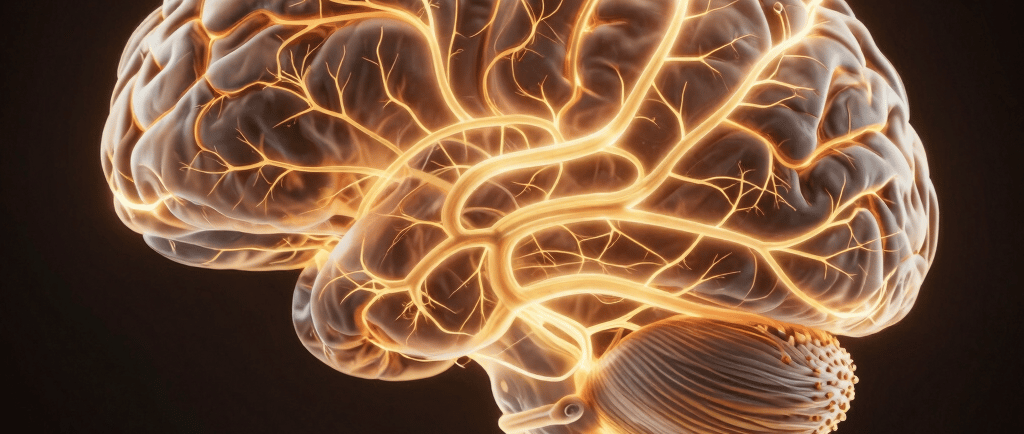
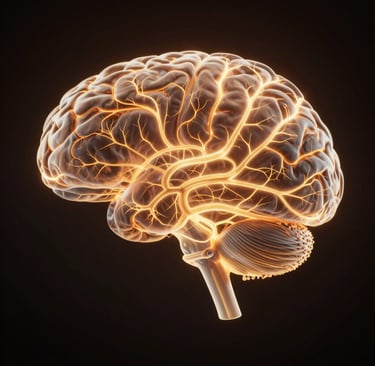
To change a habit, you must change your brain. This process is known as neuroplasticity. At its core, learning a new habit involves strengthening the connections between neurons. Think of your brain like a dense forest. The first time you try a new behavior, you are hacking through thick brush. It’s exhausting and high-effort. But the more you walk that path, the clearer it becomes, until eventually, it's a paved highway.
The "effort" you feel when trying to start something new is what I call limbic friction. It’s the internal resistance generated by your autonomic nervous system. Sometimes you're too tired (low arousal) and sometimes you're too anxious (high arousal). Both states make it hard to engage the prefrontal cortex—the part of your brain responsible for deliberate action.
The Task Bracketing Secret
One of the most powerful discoveries in neuroscience is the role of the basal ganglia, specifically the dorsolateral striatum. This area of the brain is responsible for task bracketing. It doesn't care about the habit itself; it cares about the beginning and the end.
When a habit is truly formed, your brain "brackets" the behavior. It fires a surge of activity right before you start and right after you finish. Everything in the middle becomes automaticity. This is why you don't have to think about the 50 individual muscle movements required to brush your teeth. Your brain has bracketed the entire sequence into one "unit."
To build a new habit, we must teach the brain how to bracket it. And the best way to do that is by aligning our efforts with our natural biological rhythms.
The Three-Phase Daily Blueprint
Forget "time-blocking." The brain cares more about your internal neurochemical state than the numbers on a clock. To maximize your success, divide your day into three distinct phases based on your circadian biology.
Phase 1: The High-Friction Zone (0–8 Hours After Waking)
Immediately after waking, your body is flooded with norepinephrine, epinephrine, and dopamine. This is your "alert and focused" state. This is the sacred window for your hardest, highest-friction habits.
The Strategy: Place the habits that require the most activation energy here. Whether it's a grueling workout, deep work, or learning a new language, your brain is neurochemically primed to overcome limbic friction during these hours.
Tools: Enhance this state with sunlight viewing, cold exposure, and caffeine (delayed 90 minutes after waking for best results).
Phase 2: The Relaxation Bridge (9–14 Hours After Waking)
As evening approaches, your cortisol levels drop and serotonin begins to rise. You are moving into a more mellow, "serotonergic" state.
The Strategy: This is the time for habits that require less "push." Think journaling, light stretching, or practicing a hobby you already enjoy.
Tools: Use Non-Sleep Deep Rest (NSDR) or meditation to help your nervous system transition. Limit bright artificial light to allow your brain to prepare for the final, most critical phase.
Phase 3: The Consolidation Phase (16–24 Hours After Waking)
This is the phase of deep sleep. While you are unconscious, your brain is busy performing the actual physical rewiring of your neural circuits.
The Science: Without quality sleep in Phase 3, the efforts of Phase 1 and 2 are wasted. Long-term potentiation—the strengthening of synapses—happens while you dream.
The Strategy: Protect your sleep at all costs. Keep your room cool and dark. Avoid caffeine and high-stress activities.
The 21-Day "Habit-of-Habits" Program
If you want a concrete system to get started, I recommend the 21-day habit challenge. Here is how it works:
Select 6 Habits: Choose 6 behaviors you want to make reflexive.
The 4–5 Rule: The goal is to perform these daily, but the expectation is that you will realistically complete 4 to 5. This removes the "all or nothing" mentality that kills most resolutions.
Two-Day Chunking: Focus on winning for two days in a row. The brain responds well to these small, manageable bins of time.
The Autopilot Test: After 21 days, stop the deliberate tracking. See which habits have moved into automaticity. Only once a habit is context-independent (you do it even when you're traveling or stressed) is it truly yours.
Breaking the Unbreakable: How to Stop Bad Habits
Breaking a habit is the mirror image of making one. We want to induce long-term depression (LTD)—weakening the connections between the neurons that drive the "bad" behavior.
Most people try to use notifications or punishment, but science shows these are largely ineffective long-term. Instead, use the open-loop strategy: When you catch yourself performing a bad habit (like reflexively picking up your phone), immediately tack on a positive habit right after it. If you pick up the phone, put it down and immediately do 60 seconds of focused breathing or drink a glass of water.
By doing this, you are disrupting the closed-loop of the bad habit. You are forcing your brain to change its "script." Over time, the "bad" neural pathway weakens because it is no longer a reflexive, isolated circuit.
The Reward Hack: Dopamine and Motivation
Finally, you must master reward prediction error. Dopamine is not about the "prize"; it’s about the anticipation of the prize. To keep your motivation high, don't just reward yourself when you finish a task. Start rewarding the effort itself.
Tell yourself, "I am the kind of person who leans into the friction." By subjectively rewarding the struggle, you release dopamine during the hard part, which actually gives you more physical energy (via its conversion to epinephrine) to finish the job.
Building better habits is not an act of magic; it is an act of biological engineering. By respecting your Phase 1 alertness, protecting your Phase 3 recovery, and hacking your task-bracketing circuits, you can become the architect of your own brain.
Stop waiting for motivation. Start using science.