
Stop Chasing Salaries: Build the System That Sets You Free
Ditch the paycheck-to-paycheck grind with the Cash Flow Mastery blueprint.
MINDSETSTRATEGY
3/24/20264 min read
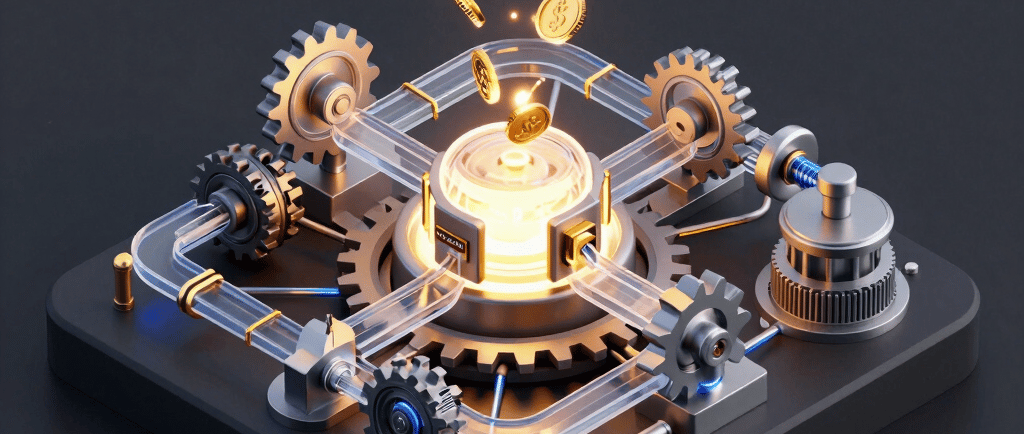
The Great Financial Illusion: Why Your Raise is Actually a Trap
You’ve done everything right. You studied hard, climbed the corporate ladder, and finally landed that dream salary. But as the numbers in your bank account grew, so did the weight on your chest. Despite earning more than ever, the month-end still feels like a race against a clock you can’t see. If you’ve ever wondered why a higher income hasn’t bought you the peace of mind you were promised, I have a sobering truth for you: You don’t have a money problem. You have a system problem.
I recently took a deep dive into the philosophy of Cash Flow Mastery, and it completely rewired how I view every dollar that enters my life. We are taught that the path to freedom is paved with raises, promotions, and hustle. But the reality is that a salary only tells you what you earn; a system determines what you keep. Most of us are running on a treadmill that’s speeding up. We earn more, we spend more, and we lock ourselves into lifestyle inflation that requires us to keep running just to stay afloat. This isn't just about budgeting—it’s about financial architecture. It’s about moving from salary thinking to system thinking.
The Lie of "More Money"
We’ve all told ourselves the same lie: Things will be easier once I earn a little more. But without a structural change, more money is just more fuel for a broken engine. When your income increases, three things usually happen: your spending adapts (the upgrade), your fixed costs lock in (the new lease or car payment), and the pressure to perform increases because you now need that higher salary just to survive.
This is the Lifestyle Inflation Cycle, the silent killer of freedom. It converts temporary wins into permanent obligations. The breakthrough comes when you realize that income is what you receive, but cash flow is what you control. High income with terrible cash flow is just a gilded cage.
Step 1: You Cannot Command What You Cannot See
The first step to mastery is uncomfortable but non-negotiable: Clarity. Most people avoid looking at their numbers because numbers don't negotiate. They show the cold, hard truth of where your money is evaporating.
To build a system, you must categorize your flow into four buckets:
Essential Fixed Costs: Your rent, mortgage, and insurance.
Essential Variable Costs: Groceries and utilities.
Non-Essential Fixed Costs: The subscription creep of services you barely use.
Non-Essential Variable Costs: The convenience spending and impulse buys.
Once the fog clears, the anxiety begins to dissolve. Fear thrives on fog. When you bring honesty to your finances, you take back the power to command them.
Step 2: Give Every Dollar a Job Before It Arrives
Most people save what is left over. The problem? Nothing is ever left over. Expenses expand to fill available income. It’s human nature.
The master’s approach is to reverse the sequence. Instead of Earn → Spend → Save, you must transition to: Earn → Allocate → Spend what remains. This is the Pay Yourself First principle, but executed with mechanical precision. The moment money hits your account, it should be divided according to a pre-decided plan: a percentage to an untouchable savings account, a percentage to debt, a percentage to investments. What’s left is your guilt-free spending money. By pre-deciding when you are calm, you don't have to negotiate with your tired, stressed, or tempted self later in the month.
Step 3: Build the "Compounding of Calm"
One of the most profound insights I gained is that money stress is a nervous system problem. When your finances are unpredictable, your brain stays in threat detection mode. You can’t think long-term when your biology is screaming about short-term survival.
The solution isn't just more willpower—willpower is a finite resource that eventually fails. The solution is Automation. Automatic transfers remove the emotional friction of saving.
Buffer accounts (dedicated funds for irregular but certain expenses like car repairs or annual fees) turn emergencies into non-events.
When your system is automated, your nervous system relaxes. And a relaxed brain makes better, more creative, and more strategic long-term decisions. This is the Compounding of Calm: the more stable your system, the better your life becomes across every domain—health, relationships, and career.
Step 4: The Long Game (The Three-Year Rule)
Financial transformation doesn't happen in 30 days. It follows a specific timeline:
Months 1-3: It feels like effort. You’re building new muscles.
Year 1: You see modest results. The foundation is set.
Year 2: Stability settles in. The habits are automatic.
Year 3: The shift happens. Money stops being loud. It moves to the background of your life, serving you rather than dominating you.
Most people quit because they measure success by outcome metrics (how much they have) rather than process metrics (did the system run as designed?). If your system ran faithfully this month, you succeeded—regardless of what the market did.
The Final Shift: From Salary to System
Mastering your cash flow is a form of Life Mastery. The discipline you build here—trusting process over feelings, delaying gratification, and choosing intentionality over reaction—is exactly what's required to succeed in everything else.
Structure is not a cage; it is the foundation of freedom. Without structure, you aren't free; you are reactive. Real freedom is the ability to pause—to say no to a job that drains you or yes to a risk that fulfills you—because you have the margin to support it.
Stop asking how much you need to earn to be free. Start asking what system you can put in place today with exactly what you have.
The system is waiting. Future you is counting on present you to start building it.