Stop Waiting For Ready: How To Build Impossible Things Today
Master the art of messy starts and build your dream.
SELF-MASTERY
4/8/20265 min read
The Myth of Ready: Why Your Perfectionism is Killing Your Dreams
You know the biggest lie we have all been told? It is not about Santa Claus or the tooth fairy. It is this: wait until you are ready. Think about that for a second. How many times have you had a fire inside you, an idea that would not let you sleep, only to tell yourself, Not yet. I need to learn more. I need a better plan. I need the perfect moment. Meanwhile, someone half as prepared as you went out and actually built the damn thing.
I recently went deep into the philosophy of How to Build Impossible Things, and it shattered everything I thought I knew about success. If you are sitting on the sidelines of your own life waiting for a sign, this is it. Here is my review of the principles that will move you from preparation purgatory to actual, tangible progress.
The Clarity Paradox: Act Your Way Into Knowing
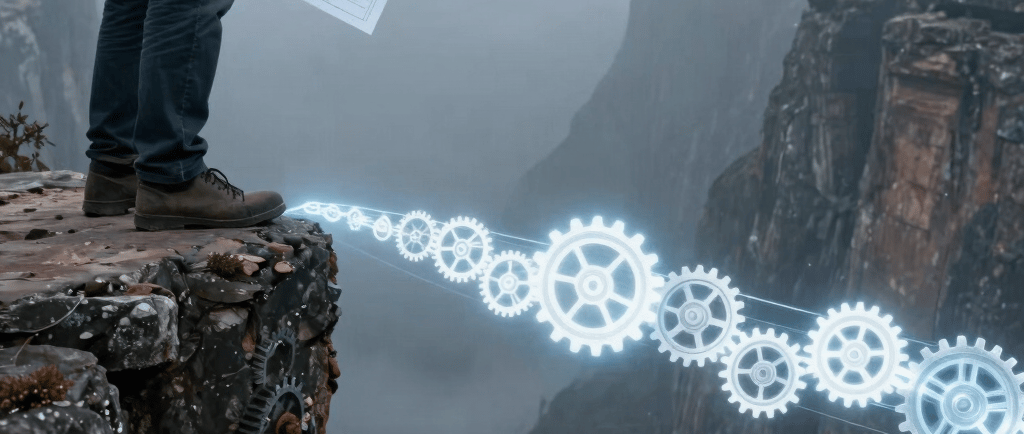
The most explosive truth bomb I discovered is that clarity does not come before action; it comes after. Most of us try to think our way into clarity. We map out every potential pitfall, analyze every variable, and wait for the fog to lift. But you cannot think your way out of a fog; you have to walk through it.
Think about a toddler learning to walk. Does she wait until she has mastered the physics of balance? Does she attend a seminar on bipedal locomotion? No. She face-plants into the carpet seventeen times before breakfast. The mess is the method. Her body learns balance through failure, not theory. Your dreams work the exact same way. Whether you are launching a brand, writing a book, or starting a podcast, the start is always going to be imperfect, messy, and uncomfortable. That is not a bug in the system; it is the whole point.
Escaping Preparation Purgatory
We get trapped in what I call a perfectionist prison. I will start my podcast once I have professional equipment. I will launch my brand once I have taken every marketing course. But that once never arrives. It is a mirage that moves further away the closer you think you are getting.
This creates a loop where you are researching and overthinking but never doing. Without action, there is no feedback. Without feedback, there is no learning. Without learning, there is no growth. You are running in place and calling it progress. You cannot learn to surf by reading about it in your living room. You have to get in the water.
The person who takes 500 crappy photos in a week will learn more than the person who reads photography books for a month. Confusion is actually the learning process happening in real time. If everything was clear from the start, you would not be learning anything.
Mastery: The Long-Term Game
In a world of fast internet and instant gratification, we have been conditioned to expect immediate results. But mastery takes time—a lot of it. When we start something new, the excitement is sky-high. We think we will be experts in months. Then, reality hits. Progress is slow. Mistakes pile up. This is where most people quit. True mastery is not a ten-week process; it is years of consistency compounding into expertise.
Mastery begins after boredom sets in. At first, everything is exciting. But when you have to repeat the same thing over and over, it gets tedious. The people who push through that boredom are the ones who become extraordinary. Consistency is your most powerful weapon. If you improve even 1% every day, the long-term impact is massive.
Measure Twice, Cut Once: The Art of Balance
While I advocate for starting messy, there is a vital balance to be struck. The rule of measure twice, cut once comes from carpentry. Before cutting wood, you measure twice to eliminate error, because once the wood is cut, you cannot glue it back.
In life, some decisions are massive and their costs are high. This principle teaches us to pause and think before taking a leap. However, do not confuse this with overthinking. Smart thinking means focused planning—gathering relevant information and then making a clear decision. Once you have measured, you must cut. Many people get stuck in the planning phase forever. Planning is only half the equation; execution is the other.
The Power of Not Knowing
We are taught from childhood never to look dumb and to always have the right answer. This makes us terrified of saying three simple words: I don't know. But growth begins exactly where you accept your ignorance. If you already knew everything, what would be left to learn? Stepping into the unknown is where the magic happens. When you pretend to know everything, your mind closes. When you accept that you are a beginner, your mind opens.
Being okay with not knowing gives you permission to be confused and to improve gradually. It allows you to ask for help and learn from others. The most powerful people I have encountered are the ones who say, I am still learning. They never see themselves as the final version.
Hard Problems Create Real Growth
There are two paths: the easy path of comfort and the hard path of challenges. Most people choose the easy one because it feels safe, but real growth never happens in the comfort zone. Think about lifting weights. If you always lift what is comfortable, your muscles will never grow. Your mind works the same way. When you tackle difficult problems, your brain stretches. You are forced to find new approaches and push past limits you thought were fixed.
Hard problems also make you unique. Easy work is something anyone can do. If you are doing what everyone else is doing, you will stay average. When you solve tough, complex problems, your value skyrockets. This is where you find your identity and stand out from the crowd.
Strategic Rest: The Secret Weapon of Builders
The hustle culture tells you that rest is for the weak. That is a lie. Rest is not the opposite of work; rest is part of work. Sustainable growth requires recovery. Muscles do not grow during the workout; they grow during the rest period when the body repairs itself. Your brain needs downtime to consolidate learning and make new neural connections.
If you try to sprint a marathon, you will collapse. Building something meaningful is a marathon. You need a pace you can maintain for years. This means prioritizing sleep and active rest. Sometimes the best ideas do not come while you are grinding; they come while you are walking in the park or taking a shower. Give your subconscious the space to work.
The Valley of Invisible Progress
This is the hardest part of the journey. There is always a gap between when you start and when you see results. I call it the valley of invisible progress. You are doing the work, but nothing seems to be happening. Your business isn't growing, your skills feel stagnant, and doubt creeps in. This valley breaks more dreams than any external obstacle. But even when you cannot see it, everything is happening. You are building muscle memory, making neural connections, and developing pattern recognition.
The results always lag behind the effort. To survive this valley, you must track the process, not just the results. Celebrate showing up. Celebrate the small wins. Trust the math of compounding growth.
Final Thoughts: Your Impossible Thing is Waiting
The world does not need more perfect people; it needs more brave people. People willing to start before they are ready. People willing to be beginners.
The impossible thing you want to build—that business, that art, that life—is already possible. Someone will build it. The only question is whether that someone will be you. Do not wait for the perfect plan. Do not wait for the fear to go away. Start today. Start messy. Start scared. Because clarity is not waiting for you in the future; it is hiding in the action you take right now.